 Homepage
Sitemap
Site Search
Homepage
Sitemap
Site Search
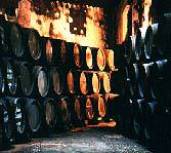
The history of Sherry centers on the Spanish town of Jerez (pronounced "Heh-reth" in Spanish) which lies not far from the Atlantic Coast in the province of Andalusia. Vineyards ring the town, rising and falling with the gentle contours of the often barren land. The best Sherry vineyard land is called "albariza," a distinctively white soil with a very high proportion of chalk. Only when grown in this special, chalky soil do the two most important Sherry grapes - the Palomino and the Pedro Ximenez - produce the finest wines. Sherry dates back to the 11th century B.C. that includes the likes of the Phoenicians, Greeks, Romans, Vandals, and Moors. Important as the region's soil to the character of the finished wine also is its special climate. The summer weather is "scorching," the relentless sun and daunting heat often drive the temperatures above 100F.
The Palomino and Pedro Ximenez grapes thrive in this seemingly inhospitable climate. With roots searching deep into the earth for what little moisture may be left from the spring rains, they use the summer's heat to produce massive clusters of grapes heavy with luscious fruit. Once ripe by conventional winemaking standards, the grapes are left on the vines in the brilliant sun for several additional days to concentrate the already rich juice. This natural intensifying of the grapes' sugars is only the first in the production of Sherry. The wine's initial fermentation of about a week to ten days is termed "tumultuous," so vigorous and violent is the seething and frothing as the grape sugar is turned to alcohol. Then follows a quieter second fermentation when the remaining sugar is converted, leaving a pleasant, totally dry wine.
These new wines are then lightly fortified and left to develop in fresh casks, maturing almost magically as the months pass into the three basic types of Sherry - Fino, Amontillado, and Oloroso. A yeast called "flor" (flower) develops on the surface of the Sherry resting in the casks. Flor grows most vigorously on the wines destined to become finos, leaving the wine dramatically dry and crisp. Flor grows less fully on the emerging Olorosos and Amontillados, so these styles keep much of their original flavor and richness. Once new wines have reached the proper point of maturation, they are then placed in a solera for aging. The solera system consists of rank upon rank, row upon row of oak casks that rest in the great storage structures called bodegas. Often called "cathedral-like," the bodegas are impressive, high-roofed buildings, quiet and cool, where the wines have time to slowly mature.
The solera system is simply a method of aging and blending that maintains a consist quality and style. When wine is needed for bottling, a little is drawn off from the oldest casks called the "soleras." The soleras are topped-up with wine drawn from the next oldest casks, one of the many rows called "criaderas." Each row of criaderas is re-filled from the one above it until the last is filled with young, two-year-old wine from the most recently classified lots. Since only a small portion of the wine in any barrel is drawn off at one time, the wine that remains is said to "educate" the Sherry which is added to it. The style of wine thus stays constant, a direct link to the original casks that were laid down.
The Solera System is the traditional Spanish system used for the production of Sherry. It is a process of gradual blending of different vintages which helps achieve uniform character and quality.
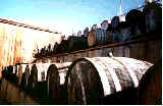 The traditional Sherry Solera
is exposed to the sun, hence the name. The warmth of the sun encourages an active
fermentation and natural aging. This unique blending system consists of several
rows of small oak barrels stacked upon one another grouped by vintages. The
oldest is at the bottom and the most recent at the top.
The traditional Sherry Solera
is exposed to the sun, hence the name. The warmth of the sun encourages an active
fermentation and natural aging. This unique blending system consists of several
rows of small oak barrels stacked upon one another grouped by vintages. The
oldest is at the bottom and the most recent at the top.
At bottling, approximately one third of the contents of each of the barrels on the bottom level is removed. Sherry from the row immediately above will replace what was removed and so on until a complete transfer is made from top to bottom.
 The wine region of Jerez, also known as Sherry is located
in southern Spain in the region of Andalucia in the province of Cadiz.
The wine region of Jerez, also known as Sherry is located
in southern Spain in the region of Andalucia in the province of Cadiz.
Jerez is one of the oldest recognized Denominaciones de Origen in Spain, covering an area of approximately 16,000 hectares.
The region of Jerez as its name states, only produces sherry, with the exception
of a few wineries that also produce a still white wine in limited amounts.
The climate in Jerez is hot and dry with clear sky most of the year. The soil in the region of Jerez plays a very important role in the quality and characteristics of the wine. There are 3 types of soil in Jerez: Albarriza, Barro and Arena. The main differences between the 3 is the amount of calcium carbonate that is present. The higher the calcium carbonate present the better the soil is for the wine. The richest deposits of calcium carbonate are found in the Albarriza zone. The percentage of calcium in this soil can range from 30% to 100%.
The grape varieties that are permitted by the regulatory body of Jerez are all white and are as follows: Palomino, Moscatel and Pedro Jimenez. Palomino is the predominant grape variety accounting for over 90%.
There are four main styles of sherry that are produced.
Fino is a light pale golden colored dry wine with an alcohol content of between 15.5% and 16.5%.
Amontillado is an older fino, richer in character with a soft copper or amber color and an alcoholic content of between 18% and 20%.
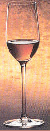 Oloroso is a rich dark dry mohogony
wine with a full rich nose. Most Olorosos have an alcoholic content of 21%.
Oloroso is a rich dark dry mohogony
wine with a full rich nose. Most Olorosos have an alcoholic content of 21%.
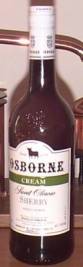
Cream sherries are a blend of dry Oloroso and sweet Pedro Jimenez. Cream sherries are dark rich wines with a soft sweet finish. The alcoholic content of these wines are generally 20% - 22%.
The production of sherry has been reduced significantly since the early 70's, with an annual production of approximately 90,000,000 litres today.
Here is a classic Spanish recipe---Rignones a la Jerezana---Veal Kidneys Sauted in Sherry.

Complied from, Gonzalez Byass Inicial, Sherry .org, The House of Sandeman & The House of Domecq Sherry
acetaldehyde
This is the main aldehyde which is present in all wines (especially sherry). it can be an important part of the bouquet of lighter, unfortified wines. too much is undesirable and results in wines that display a "sherry-like" smell.
activated carbon
Used to assist precipitation during fermentation, to clarify and purify wine. in white wines, pale dry sherry or cocktail sherry it removes excessive color. it also is used to reduce the color in the juice from red and black grapes.
aging
There are wines that benefit from aging and others that don't. wines have a life span which can be measured from just a few years to decades. most light white wines and ros (chenin blanc, sauvignon blanc, sancerre, etc.) are best drunk within three to five years after the vintage. some heavy white wines (montrachet, some California chardonnays, semillons, and sauvignon blancs, German & Alsatian rieslings, gewurztraminers, etc.) can live and improve for years. most red wines can benefit from cellaring and will improve with age (barolo, cabernet sauvignon, dolcetto, mourvedre, nebbiolo, petite sirah, pinot noir, syrah, and some zinfandels). wines with high sugar contents (sauterne, barsac, late harvest wines, eisenwine) and those fortified with alcohol (port, sherry) can last for many years in the cellar and continue to improve. wines which have passed their optimum age can display off-colors (in white wines they tend to appear more golden, yellowed, or even a brownish tint, while in red wines they take on a decided brick-red hue tending toward brown) and non-pleasing odors.
albariza
Spanish term which is used to described the diatomaceous chalky-white soil of the best jerez sherry vineyards in Spain.
albariza (al-bar-ee-tha)
White soil containing sand, clay and, ideally, 40% chalk. considered the best soil for producing finos.
amontillado
A nutty, hazelnut colored aged type of Spanish dry sherry.
amontillados (ah mown tee yado)
Wines of the fino class that have acquired an amber color with age and a dry nutty flavor. a greyish-white flor (yeast) film develops which is thinner than the film that develops on other finos. the flor lives for the first years then dies and falls to the bottom of the cask. Finos can produce amontillados two ways 1) by leaving them in cask without adding new wine (eventually the flor dies), or 2) by increasing the alcoholic strength to 16.5% volume which will reduce the flor and eventually kill it. hence, the explanation of "amontillado as an old fino."
amoroso
Spanish term for a medium-dry sherry.
aada (an-ya-da)
Unblended wine from a single vintage. used to feed a solera system. bodega warehouse or cellar where sherry is stored. when plural, the whole of a shipper's business (e.g. bodegas domecq). butt barrel; from the Spanish word bota. size varies from 160 to 170 gallons.
arenas
Spanish term for the sandy soils commonly found in the jerez sherry vineyards in Spain.
barros
Clay soils found in Spain's jerez sherry vineyards.
bota
Spanish term for a butt or sherry cask that holds approximately 500 litres (132 gallons).
calcium sulfate
Used to lower ph in the production of sherry (also known as gypsum).
capataz (cap-a-tath)
Cellar master or foreman of a bodega. usually, a master blender.
cheribita
This is a Spanish drink of sherry and bitters (the English apparently invented this one as a morning drink and then passed it back to the Spanish).
consejo regulador
Spanish for regulating council, comprised of growers, producers merchants and the ministry of agriculture, who set the ground rules for and administer wine laws in each region. similar to France's appellation controllee.
cream
A rich, dark, sweet style of blended sherry.
cream sherry
Cream sherries are created from naturally dry olorosos which have been sweetened with rich, aged wine made from sun-dried pedro ximenez grapes.
criadera
A spanish term which is applied to the nursery (first) stage in a sherry maturing system (solera).
criadera (cree-uh-DARE-uh)
Literally "a nursery." A component of the solera system. A series of butts containing wine of the same relative age used to refresh the next oldest criadera. It, in turn, is refreshed form the next youngest.
fino
Finos are the lightest and driest of all sherries. finos are particular favorites of the Spanish themselves, who serve them well-chilled as an aperitif before lunch or dinner. they also are fine accompaniments to shellfish.
finos (fee nos)
Both a sherry class and a finished wine. The fino class includes amondillados and manzanilla. Fino sherries are pale straw color, very dry, delicate and refreshing, matured under the influence of "flor." said to taste of apples, almonds and bread. The flor remains until the final fortification. It is the flor development that imparts the taste and character to the finos. Flor is a film that is formed by yeast, saccharomyces ellipsoideus, which develops after fermentation and forms a white film on the surface of the wine. Flor feeds on air, glycerol and alcohol among other things, and prefers an alcohol content of 14.5 to 16.0 vol. and a temperature of 59 to 100f (e.g. spring and autumn are the best). The flor protects the wine from oxygen and destroys mycoderma aceti, the bacteria which turns wine into vinegar. This biological form of aging is responsible for the character of manzanilla, fino and amontillado sherries.
flower
In the jerez region of Spain, it is common to find a film on the surface of wines which are being made into sherry. this is caused by yeast that multiply at very high rates. this yeast gives sherry its distinctive nutty flavor.
gypsum
Also known as calcium sulfate, gypsum is used to lower the ph in sherry production.
manzanilla
A dry, almost salty tasting Spanish sherry originating from the coastal town of sanlucar de barrameda. some have called this the driest wine in the world.
oloroso
Fragrant in Spanish sherries form the basis for "cream" sherry which are made from naturally dry olorosos which have been sweetened with the rich, aged wine made from sun-dried pedro ximenez grapes. oloroso sherries offer complex, fragrant and lingering flavors.
olorosos
Oloroso refers to both a style of sherry and a finished sherry. the name infers a strong bouquet and the wine is a dark gold or amber color. soft and mellow with more body than amontillados, the taste is reminiscent of walnuts. pure olorosos are dry on the palate. medium sweet, cream and brown sherries are olorosos with increasing amounts of sweet pedro ximenez wine and color wine added to produce smooth, rich dark sherries. olorosos are fortified to 18% alcohol by volume and therefore do not develop flavor.
palo cortado
Palo cortado is a rare type of sherry and is somewhere in style between an oloroso and an amontillado.
palomino fino
The principal grape variety of sherry. not to be confused with fino type sherries
pedro ximenez (pedro-hee-men-eth)
The grape variety traditionally used to make the thick sweetening wines used to sweeten sherry blends just before they are bottled. may also be bottled as a varietal wine. domecq venerable is a rare old pedro ximenez. most "px" is not from jerez, but from the hotter montilla-moriles area about 135 miles to the northeast. Recently several dry versions have been developed and are quite nice, very dry and fragrent. In recent years the grape has been used to make a wonderful dry white wine similar to a dry Muscat but tasting and smelling like sherry. Look for Ximenis, Genium!
More information at the following sites: