 Homepage
Sitemap
Site Search
Homepage
Sitemap
Site Search
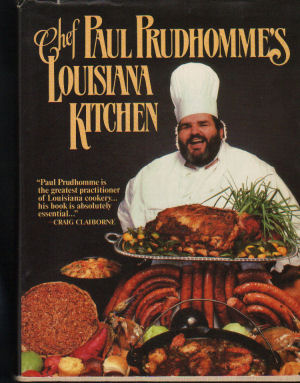
Chef Paul Prudhomme's Louisiana Kitchen Cookbook; William Morrow & Co., New York, 1984
Jambalaya, gumbo and blackening are well known now but were
almost unheard of outside of Louisiana until the 1980's. Thanks to
Chef Paul Prudhomme's Louisiana Kitchen cookbook and his restaurant
in New Orleans, they are now common words in culinary circles and
many restaurants. You might say that Chef Paul is one of the fathers
of modern Creole and Cajun Cuisine. There have been chefs before him
in New Orleans and several others who now spread the word of the
particularly seasoned food prepared in that area. Yet he remains as
the original celebrity chef of the area who still today cooks at his
restaurant and makes guest chef appearances.
Many of the
dishes in Paul Prudhomme's Louisiana Kitchen cookbook are classics.
They have been prepared in many of the famous restaurants in New Orleans
for years. Paul didn't create a book of current and trendy recipes, it's
rather a cookbook of excellent recipes done well---very well indeed.
Over the years I have referenced recipes many times and have been
successful preparing them. The recipes are well written and easy to
follow if you have good cooking skills and understand proper cooking
techniques. I love his recipe for Crayfish ‰touffée, it is authentic,
very tasty and presents well on a plate.
I've had this dish in a few restaurants in New Orleans and I can
vouch for Paul's as being right on the mark.
There are few
things that you will have to do before you successfully prepare
recipes from this book. You'll need to plan ahead and buy the
seasonings he calls for, because there are no substitutions and if
you leave any of the ingredients out you won't have a good tasting
dish or at least not as it was meant to be. You will also need to
practice making roux, the oil and flour mixture that is cooked and
used to thicken sauces. That's because the roux used in many of
these recipes is unique to the cuisine of the area, being cooked to a
rich mahogany brown color, which adds a flavor all of its own in some
dishes, especially in ‰touffée recipes. And when sautéing
vegetables, if you think that the pan isn't hot enough or that you
didn't cook them enough---you probably didn't!
This is one of the best American cookbooks ever written!
It's a Good Cooking must buy/must have cookbook for any serious cookbook library.On a lightly floured surface roll out dough to a thickness of 1/8 to 1/4 inch. Very lightly flour the top of the dough and fold it into quarters.
Carefully place dough in a greased and floured 8-inch round cake pan (1 1/2 inches deep) so that the corner of the folded dough is centered in the pan. Unfold the dough and arrange it to fit the sides and bottom of pan; press firmly in place. Trim edges. Refrigerate 15 minutes.
For the sweet-potato filling: Combine all the ingredients in a mixing bowl. Beat on medium speed of electric mixer until the batter is smooth, about 2 to 3 minutes. Do not overbeat. Set aside.
For the pecan pie
syrup: Combine all the ingredients except the pecans in a mixing bowl.
Mix thoroughly on slow speed of electric mixer until the syrup is
opaque, about 1 minute; stir in pecans and set aside.
To
assemble: Spoon the sweet-potato filling evenly into the dough-lined
cake pan. Pour the pecan syrup on top. Bake in a 325 degree oven until a knife
inserted in the center comes out clean, about 1 3/4 hours. (Note: The
pecans will rise to the top of the pie during baking.)
Cool and serve with Chantilly Cream. Store pie at room temperature for the first 24 hours, then (in the unlikely event there is any left) refrigerate.